Mouthwatering Coconut Sticky Rice Recipe
This is the sticky rice recipe you’ll want to try
First off I want to say this sticky rice recipe was absolutely inspired by Chrissy Teigan. She has a fabulous coconut sticky rice recipe in her cookbook that I tweaked to ensure that my toddler and I wouldn’t experience any mood swing inducing blood sugar roller coasters whenever we indulged in this delicious sticky rice treat!
Coconut Sticky Rice Ingredients
1 can 100% coconut milk (full fat or coconut cream works!) be sure to read the label and make sure it doesn’t have any gums, preservatives, or fillers (all of which cause digestive upset)
1 3/4 C filtered water (just refill the coconut milk can to fulfill this measurement)
1 scoop BeWellByKelly Vanilla Grass-Fed Protein (Code MUMWITHABUN for $10 off)
OR substitute with 1/4 C lakanto powdered monkfruit (powdered version)
1 tsp sea salt
How to Cook Coconut Sticky Rice
Combine the *soaked, soured, and well-rinsed rice with the can of coconut milk, 1 3/4 C water, vanilla protein OR lakanto monkfruit powder, and salt in a saucepan with a lid.
Bring to a boil over high heat and stir occasionally.
Lower the heat to a simmer, cover, and leave it as it barely simmers until the rice is cooked and the liquid is absorbed. This takes about 20 minutes.
Remove the saucepan from the heat and fluff it up with a fork.
Re-cover the saucepan, and let it *cool.
*Read here to see the amazing benefits and the WHY behind my recommendation to always “soak & sour” your rice before cooking and why I urge you to then “cool” your cooked rice for yourself or any body!
Optional Topping: Raw Honey Drizzle
WHERE TO PURCHASE INGREDIENTS
I find the best price for
one of the best quality rice brands (Lundberg) I’ve seen in the market
Pure coconut milk (without all the added fillers)
Lakanto Monkfruit Sweetner (all types),
And even quality salt (i.e. Maldon)
ALL ingredients online at Thrive Market — this link gives you 40% off of your first order!
How to Make Rice Truly Healthy: Soak, Sour, and Cool for Better Digestion
Transform your everyday rice into a health powerhouse: simple “soak & sour” activates enzymes that unlock vital nutrients, while “cool & cook” turns rice into resistant starch that supports gut health, stabilizes blood sugar, and improves mineral absorption.
How to Make Rice Really Good for You
Rice can be much more than just a simple carbohydrate — with two small tweaks, you can increase its nutritional value, improve digestion, and support your gut and blood sugar. The secret? Soak & Sour, then Cook & Cool.
1. Soak & Sour — Unlock Nutrients
What Is Soaking & Souring?
This step is quick but powerful. By soaking rice in water with a little acidity (like apple cider vinegar or lime), you help increase phytase activity — an enzyme that breaks down phytic acid, an “anti-nutrient” that binds important minerals.
Why Care About Phytic Acid?
Phytic acid reduces your body’s ability to absorb minerals like iron, zinc, calcium, magnesium, and B vitamins. (Source)
By activating phytase through soaking + souring, you lower phytic acid and improve nutrient absorption. (Source)
How to Do It
Use a glass jar (with a loose lid) to soak your rice.
Add filtered water and a splash (~1 TBSP per cup of water) of something sour (apple cider vinegar, lime juice, etc.).
Submerge the rice, cover loosely, and let it sit for 6 hours (if dealing with histamine overload) ideally 12–24 hours (if you’re not dealing with histamine issues).
After souring, rinse the rice thoroughly before cooking.
2. Cook & Cool — Build Resistant Starch
Why Cooling Matters
When you cook rice and then cool it, some of its starch retrogrades into resistant starch — a type that resists digestion in your small intestine and instead feeds good gut bacteria. Healthline
This kind of starch can:
Lower blood sugar spikes PubMed
Improve insulin sensitivity BioMed Central
Support gut health through butyrate production, which helps gut lining integrity and reduces inflammation MDPI
How to Do It
Cook your rice as usual.
Let it cool (ideally in the refrigerator) for several hours (12 h+ is common in studies).
Reheat before eating, if desired — but the resistant starch benefit remains even after reheating. PubMed
3. Why This Matters for Different Groups
High nutrient needs: Babies, pregnant or postpartum people, and those recovering from illness can especially benefit from better mineral absorption via soaking.
Digestive or gut issues: Resistant starch feeds good bacteria, supports butyrate production, and helps seal a “leaky” gut.
Blood sugar management: Cooling rice helps blunt the glycemic response, which can support mood, cravings, weight, and hormone balance.
4. Other Tips for Rice
Which rice to use: I prefer basmati (lower in arsenic), but jasmine works too.
Which rice brand: I like to get Lundberg rice for their farming practices & to minimize toxins / heavy metals in our rice.
Storage:
Fridge: 4–6 days in an airtight container.
Freezer: Up to 4 months.
Reheat: On stovetop, add ~ 2 TBSP water per cup of cooked rice, cover, and heat ~5 minutes.
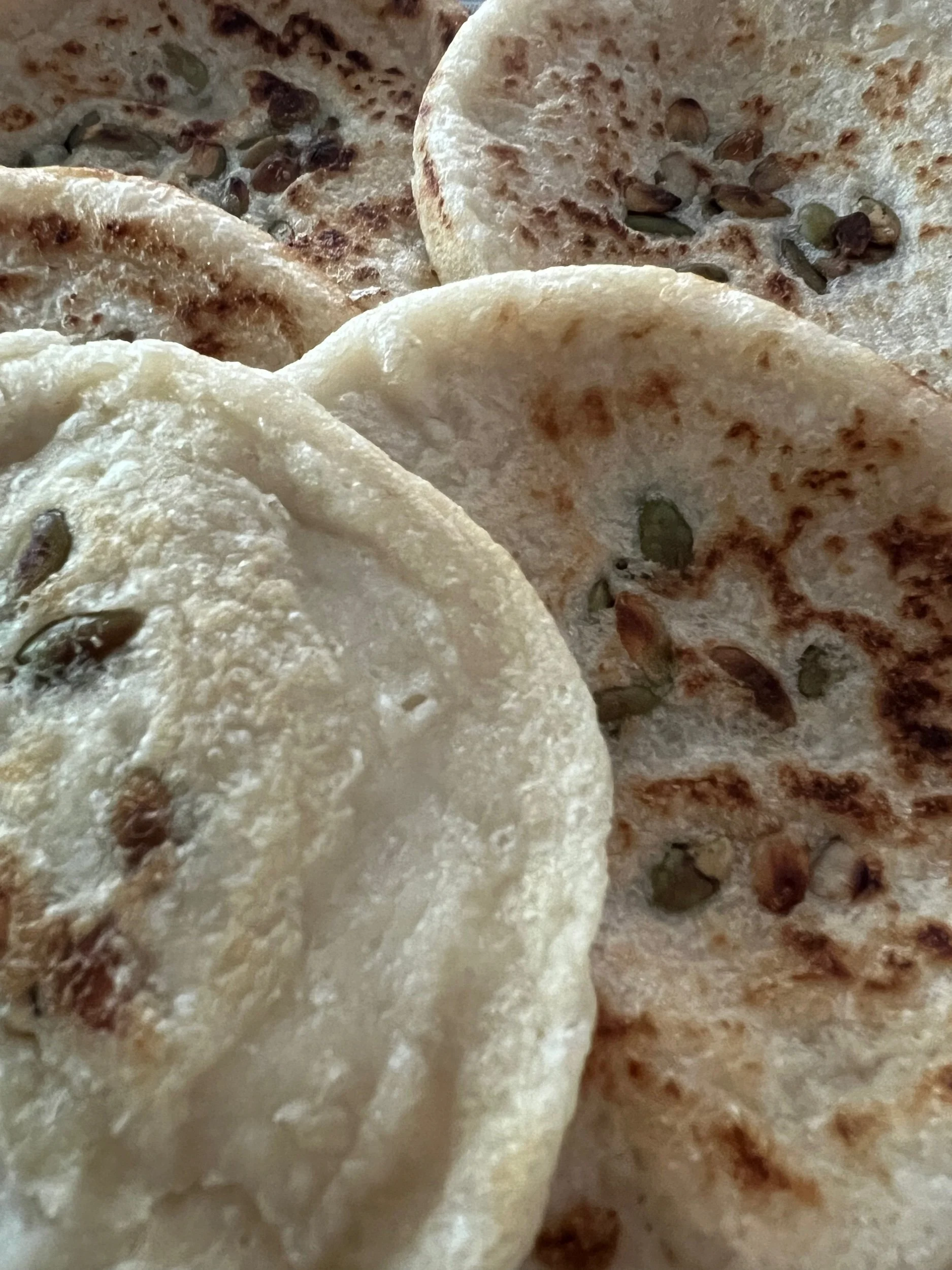
Mochi Pancake
Mochi pancake step x step with asmr goodness 🥞
MOCHI PANCAKE INGREDIENTS
1 cup tapioca flour
1 cup almond flour
2 cup milk of choice (water works here too, but I prefer a milk for healthy fat)
1 scoop of Be Well By Kelly’s Unflavored Plant-Based Protein Powder * (the chocho bean gives the mochi pancake an extra earthy taste and actually made us think of the delicious Korean rice cake: injeolmi)
Pinch of salt
Coconut oil (or oil of choice)
Sprinkle of sprouted pumpkin seed
HOW TO MAKE MOCHI PANCAKE
Mix all dry ingredients together
Add in the milk and mix until well incorporated
Heat skillet over medium heat
Add coconut oil
Pour about 1/4c of the batter for each mochi pancake
Cover with a lid to speed up the cooking process
When the pancake edges are cooked and the center is still a little gooey, sprinkle some pumpkin seeds, and flip
Lower the heat to medium-low (leave it there until you finish cooking the batch)
Cover with a lid for a couple of minutes
When they’re done, both sides should look a touch golden
Serve warm (pairs beautifully with nut/seed butters & a drizzle of honey)
Storage
Freeze any leftover mochi pancakes with parchment paper between each pancake to prevent them from sticking to each other as they freeze up.
When ready reheat, add additional fat to the frozen mochi pancakes and air-fry or bake at 325 for about 10 minutes (including preheating time)
(I prefer: animal fat/lard - the edges will turn crispy while the center remains a chewy mochi texture… YUM.)
Why adding the Protein Powder is key
Every ingredient and measurement my father in law put into this dish is purposeful, but I requested an addition of my favorite protein powder. Why?
the TASTE!
The flavor profile is elevated with this protein powder.
The mochi pancakes tasted noticeably earthier
everyone at the table agreed: chocho bean protein powder shall be added into all batches moving forward!
(more importantly) to blunt the blood sugar spike that happens when we eat carbohydrate rich foods (I.e. rice, tapioca flour, bread, etc)
😬 I’ve personally seen what happens I indulge in goods that contain tapioca flour as a base by using a Levels CGM 👇🏻 this is what happens when I eat a tapioca based bread without added protein.
Solution: balance meals/snacks with protein, it slows the digestion of the carbs in the meal thereby preventing large spikes & dips in blood sugar levels;
“balanced blood sugar leads to improved sleep, energy, mood, skin, waistline, cravings, and even slows down aging.” — Glucose Revolution
*use code: MUMWITHABUN for $5 off the Protein Powder at bewellbykelly.com
My in-law’s love coming up with healthy-ish recipes that reconnect them to the flavor profiles of their hometown, but when I became a part of the family, they started brainstorming dishes that I could eat with them. gluten and dairy free dishes, to be exact. I must say, these mochi pancakes makes me feel really loved, included, and I look forward to it.