Weaning
How Long Should I Breastfeed?
Everyone has different life circumstances.
Considering the health benefits of breastmilk a developing baby, the World Health Organization (WHO) recommends breastfeeding at least until the 2 year mark. While I encourage every mum who desires to breastfeed to do so as long as she has the support and as long as she can, ultimately:
When it comes to a mum & her child’s breastfeeding journey, I say,
everyone and every body is different and has different needs.
A mum & child’s breastfeeding duration is highly personal and should be respected as such.
Why I Breastfed for 3+ Years; What it Took
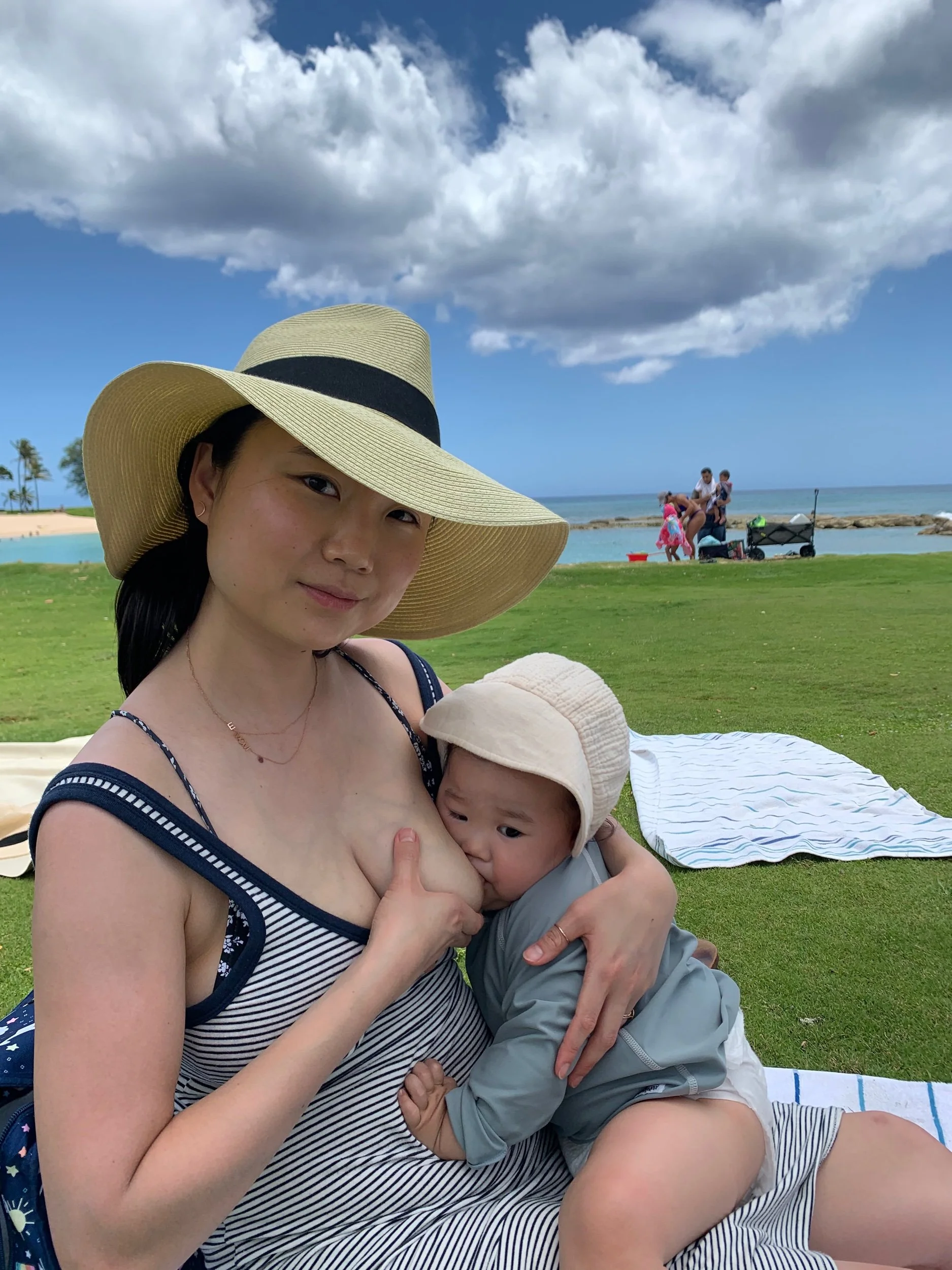
While I am SO grateful to have breastfed my daughter for 3 years and 4 months, it was not easy. It required immense support from my husband especially in the early postpartum days. Latching was hard and painful as she has a lip tie; even when nursing became second nature, I needed my husband’s help especially when she was sick (i.e. he brought me meals so I could nurse her throughout all her past colds and I do feel providing her with ample breastmilk helped her recover quickly, stay hydrated/nourished, etc). Not to mention the ridicule and comments you get from others (i.e. individuals who have not done research) who discover you’re still breastfeeding your child longer than they see fit… those definitely made the journey rougher than necessary!
Nevertheless, we persisted… because I knew that
The benefits of the liquid gold did not suddenly vanish at 9 months
Our Doctors recommended we continue breastfeeding for 3 years (if possible) to help increase my daughters chances of overcoming some if not all of her food allergies. And God knows I would move mountains to see that become a reality.
Things to Note BEFORE Weaning
Weaning timeline
Babies <1 year: need to be provided formulas or donor milk if breastfeeding ends before their 1 year birthday
Babies >1 year: only when baby is reliably consuming a balanced and diverse diet of 3 meals / day should supplemental milk (i.e. formula / breast milk / donor milk) be discontinued — consult a nutrition consultant like myself if you would like to discuss exactly how many oz a baby should be supplementing with as every baby’s circumstance is unique
If breastfeeding beyond the 2 year mark:
be sure that mum is nourished (i.e. load up on DHA/quality seafood/cod liver oil, vitamin D / sunshine, calcium, and more)
set strong boundaries to protect yourself from those who claim your breastmilk is useless at that point. (It definitely continues to provide baby with beneficial nourishment and continues to have immune supporting properties.)
Intentionally schedule in some “self care” time where mum can tend to herself with walks outside, yoga, massages, or whatever it is that she needs to experience rest.
What Weaning Looked Like for US
For us, weaning has been gradual. I breast fed on demand from day one and only held back on nursing my child with the assistance of a Lactation Consultant in order to diminish my supply (oversupply was an extremely painful and difficult hurdle for me to overcome in the early postpartum days). That means I pumped and donated when the pressure was too intense instead of offering her the boob to relieve the pressure. Allowing her to suckle all day only led to an increase of my milk supply because milk supply is very much “supply & demand”.
When she hit her 3rd birthday, I decided I needed to wean her as she was well nourished via solid foods and the 3 year mark was a personal goal I set for us in the hopes that it would help her overcome her food allergies.
Since Emma had been reliably eating a nutrient dense diet balanced with 3 meals a day and snacks in between, I was confident that she was ready to wean. Thankfully, she understood when I explained to her that my body needed more rest at night - waking up to let her nurse while we shared the bed was not that hard, but I needed unbroken sleep. I explained to her that the milk bar was essentially closed when the sun was down and during the day I would distract her with activities and snacks when she wanted to nurse for comfort. Gradually, the feeds became less and less during the day.
Currently, we are down to a 2 minute night feed before bed. She asks me to set a timer and when the alarm sounds, she unlatches and puts herself to sleep beside me. I am so proud of her. I am so proud of us.
Why I need to wean her in 1 week
Unfortunately, I was ill-informed on the day my daughter arrived March 2020 with an, “I don’t see why you need to take your prenatal anymore since your baby is out!” I was not nourishing myself with the specific nutrients I needed as a solely breastfeeding mum; for the first 6 months postpartum I was far from hitting the mark of a nutrient dense postpartum diet. I just ate ”healthy” and a lot of whatever satiated me. Yet, my body and bones ached. My milk supply was thriving, but my health was declining.
A Note for Postpartum Mums
Hey, Postpartum / Pregnant Mums, if you decide to breastfeed please do not discontinue your “Prenatal” Multivitamin unless you are regularly consuming some of the world’s more nutrient dense foods (i.e. grass fed or pasture raised liver, lots of raw milk, and dozens of pasture-raised eggs)
I Did Not Consider Specific Nutrient Needs while Breastfeeding: Here’s what happened
My dental health particularly took a hard hit - a breastfeeding mum’s body prioritizes nourishing her milk for her baby to the point that it will draw from mum’s bones and nutrient supply to ensure that baby gets everything it needs if mum isn’t getting enough nutrients via food/supplementation. 3 years and 4 months of breastfeeding has brought me to the dentist office many times and thankfully I’ve found a holistic dentist who was able to pinpoint where my tooth related pains were coming from.
I’m scheduled for an oral surgery July 31st and I am equally anxious and excited for it. Excited for my health and dental health to be on the up and up — yet not excited for how bloody and painful the week following the operation will be. Yikes!
All this to say, I have completed 3 fillings, and one of my teeth are infected. I need to take antibiotics for 7 days.
I am definitely not a fan of antibiotics as it has wrecked my gut, skin, and health in the past due to overuse. I am disconcerted by how overused/misused antibiotics are but in some circumstances (i.e. certain surgeries) I understand it can be a lifesaver and I have to take it.
During the time I am taking the round of antibiotics, my Doctor advised me to not breastfeed my child. The timing could not be more perfect. We’re down to a couple minutes of breastfeeding a day; she understands why I cannot breastfeed her in the days before & after the surgery; and I’ll have a couple days of childcare (i.e. grandparents) - so I should be able to rest and recover while Emma is cared for!
Life in the slow lane can be Good.
As a mum I am seeing that living “life in the slow lane” is sometimes the wisest and best thing I can do for myself and my relationship with my child.
The other day, I took Emma to the Honolulu Zoo and loved that one of the most intelligent animals on earth also prioritize Life in the slow lane.
An orangutan mother is solely responsible for teacher her youngsters everything it needs to know to survive on it’s own. Youngsters are not weaned until age 7.
- Honolulu Zoo on Orangutans
In my next post, I’ll be sharing some practical and nutritional tips for how to support a mum throughout her weaning journey.
Skin Healing and Cycle Syncing
Something exciting happened when I gave a shoutout to experts who helped me through my skin health journey… I was given more opportunities to be extra vulnerable, share personal details, and even provide discounts* to help others who are on the healing journey too…
My Skin Story
HOW IT ALL BEGAN
I began struggling with acne as soon as I started birth control. At age 17, I was put on birth control to make me “normal” as I wasn’t having a regular cycle. Instead of “fixing” my period, my gut health spiraled. For 10 years, when I rose concerns regarding the pill, Doctors told me I had to stay on the pill or else “develop cancer” and that the pill was not the cause of my acne. I felt stuck, but I knew something was not right… I was no longer able to digest the foods I used to (i.e. gluten, certain vegetables, etc) and my skin/mental health was a suffering. I’m glad I chose to listen to my gut and find reliable support and resources —
“Did you know […] your natural hormones are anti-inflammatory and anti-cancer, but the hormone-mimicked in birth control are pro-inflammatory and increase blood pressure, blood clotting, and cancer” - Dr. Felice Gersh
THINGS I TRIED TO CLEAR MY SKIN
Naturally, I went on a quest to seek healing for my skin.
I tried too many expensive k-beauty products, invested in weekly facial$, and kept my skin squeaky clean. My skin barrier was damaged from all the incredibly strong topical treatments I put on, and the acne persisted despite my efforts.
The journey was like a puzzle, but the missing piece was this:
Proper Nutrition
THE ROOT CAUSE OF MY SKIN ISSUES
birth control had damaged my gut so intuitively I knew my healing had to happen in the gut.
Acne = inflammation.
I began to heal my gut by
coming off of the pill (allow my natural hormones to have a chance at healing my body) AND
swapping inflammatory foods & foods that my body could no longer tolerate with foods that my body recognized as medicine
FACTORS & FOODS FOR SKIN HEALTH
Please note that every body is different and this is what worked and continues to work for me / my body
Quality meats (i.e. grass fed & finished beef, pasture-raised poultry/pig, and organ meats — i.e. LIVER daily!)
Oysters (2-3 times a week)
Wild caught fish (i.e. sardines, salmon, and mackerel)
Raw carrots (I love Dr Ray Peat’s Carrot Salad Recipe and the why behind each ingredient)
Probiotic rich foods / supplementation (i.e. kimchi, SEED, and P3OM)
*Collagen rich, clean protein (i.e. 100% grass fed beef protein isolate Be Well By Kelly Protein Powder - Use Code: MUMWITHABUN for $5 off)
Magnesium - sprouted pumpkin seeds, dark chocolate, supplementation
*A skin barrier healing skincare protocol — I credit mine to @healthyskinglows skin healing protocol (use my code JANE10 for a discount)
INFLAMMATION, ACNE, SKIN TRIGGERING FACTORS
These are the foods/factors that hindered my healing and was causing inflammation:
Industrial Seed oils (i.e. sunflower oil, canola oil, vegetable oil, peanut oil, etc)
Gums / preservatives / fillers (found in plant based milks, yogurt, etc)
Most Pasteurized Cow’s Milk based products (if it isn’t raw, I will break out with acne and I can’t digest it!)
Sugar (I’m not keto, but if I’m not mindfully keeping my blood sugar levels stable, I will experience acne)
Antibiotics (I have taken it when I absolutely needed it for surgery, but otherwise I refuse it because it directly impacts my gut and thereby my skin health and immune system)
Gluten (within a few hours to a few days of consuming gluten I not only experience immense abdominal pain, but acne too)
Not enough sleep (using red light, getting up / going down with the sun, and taking magnesium before bed all really help me)
Over exercising
Helpful Lifestyle Changes for Skin Health
I learned to respect my female cycle via cycle syncing. Not only did it help me respect my body via food but also via activity choices.
CYCLE SYNCING VIA FOOD
Focusing on specific foods depending on what part of my cycle I’m in looks like this:
Menstrual Phase
Since hormone & energy levels are at their lowest in this phase, food can be leveraged during this phase to support mood & restore energy levels as the brain gets used to the hormone fluctuation
Iron & Zinc rich foods for remineralization
organ meats, oysters, grass fed red meat, kelp/nori/seaweed, fatty wild caught fish, sprouted seeds,
+ healthy fats for absorption of all the goodness in the above listed foods (i.e. avocado, coconut oil, etc)
Nourishing & energizing foods
bee pollen* (watch my video for all the details you need to know about bee pollen), cottage cheese, bone broth, BWBK protein powder*, buckwheat, dark chocolate
Vitamin C rich food to help with iron absorption
Berries, broccoli, acerola powder, camu camu, watermelon, bell peppers, burdock root
Hydration
Ginger/Green (i.e. bancha) tea, trace minerals via quality salt & electrolytes like LMNT packets* / coconut water, and bone broth!
BEETS for helping with blood flow especially considering blood loss is occurring
Follicular Phase
Magnesium rich foods
spinach cooked, pumpkin seeds, dark chocolate, broccoli sprouts
Fiber
acacia fiber, carrots, avocado, fermented foods, broccoli/cauliflower
Omega 3 rich foods
wild caught salmon/sardines/anchovies, cod liver oil - Rosita brand, eggs
Ovulation Phase
Iron & Zinc rich foods
organ meats, oysters, grass-fed red meat, soaked & soured beans, sprouted organic sunflower seeds
Vitamin C rich food to help with cervical mucus production
Berries, broccoli, acerola powder, cauliflower, broccoli sprouts
Omega 3 rich foods
wild salmon/sardines/anchovies, wild-cold pressed cod liver oil - (i.e. Rosita brand), pasture-raised eggs
Note: This phase and the next phase (Ovulation & Luteal) is when estrogen rises and this hormonal change shows up via histamine symptoms worsening (i.e. bloating, cramping, or headaches)
Luteal Phase
Blood sugar balancing focused consumption of starchy foods for less irritability & more energy
Sweet potatoes baked in lard (a personal favorite!)
Soaked and soured lentils
Rice (cooked & cooled to maximize resistant starch - see this post for how)
Steamed beets drizzled with olive oil
Raw carrots dressed with salt & coconut oil (i.e. Carrot salad recipe) or with hummus
Hydration focus
Cucumbers, watermelon, berries, and electrolytes (i.e. LMNT, coconut water, bone broth)
Magnesium rich foods
Leafy greens: spinach/dandelion greens/beet greens cooked, pumpkin seeds, dark chocolate!
Anti-inflammatory foods to beat the bloat and breast tenderness
Turmeric, ginger, fatty fish, steamed beets, and berries
Scheduling my activities (i.e. workouts and social events) to match my cycle
EXAMPLE: I choose lighter workouts (i.e. stretches, yoga, walks) during 1/2 my cycle (i.e. luteal & menstrual) and more challenging workouts (i.e. heavier weights, cardio, etc) during the other 1/2 of my cycle (i.e. follicular & ovulatory) via Team HomeBodies
A Final Skin Health Note
My skin has become a window to my internal health and I’ve actually grown to be grateful for it.
Now, IF I Breakout…
(which I still do once in a while — because I love to enjoy life, pizza & dessert… and I can’t always get all the sleep I need as a working mom)
After exposure to any of the inflammatory factors I mentioned above, I focus full throttle on my routine of healing my gut via food & lifestyle.
Why I Share my Skin Healing Journey
1) To acknowledge that this journey is TOUGH
Personally, I struggled to show myself grace - there are a lot of tone-deaf statements that come your way when you’re suffering with skin troubles, which can often lead to depression.
“You need to wash your face better - you should try an 8 step skin care routine that helped clear up this other woman’s face. I saw it on the Korean news.”
— an individual with no true knowledge of my skin journey/health/nutrition
2) To lead others to resources & knowledge
My hope is always that by sharing my journey, someone else will grow in hope and find courage to press on. Our bodies were made wonderfully. It can & will heal… if we learn to tune in and support it the right way.
Again, every body is unique and different. What foods may work for others (i.e. conventional meats, regular bread, etc) do not work for me. It was a hard truth for me to accept, but once I did and once I found what foods were my medicine, my gut / body began healing. And one day, I noticed my skin glowing.
Healing is from the inside out, friends. Let’s do it.
Before & After my Skin Healing Journey
Clear Skin Journey FAQ’s
What is your skincare routine/what products do you use?
I made a video on my skincare routine & what products I use. It’s super simple, and I learned to heal / maintain my skin barrier through Sara @healthyskinglows - her Skin Rebalancing Protocol was the final missing piece in my skin journey puzzle. You can find all her offerings here:
Use my code JANE10 at checkout for a 10% off discount on any of Sara’s offerings
Sara is incredibly knowledgeable and gave me the resources and tools I needed. I wish I had stumbled across her content sooner.
What foods helped you clear your skin?
There are So many foods I can highlight but the main ones / heavy hitters (if I had to dwindle it down to a top 3) are: grass fed / finished beef liver, oysters, and healthy fats (i.e. removing inflammatory seed oils)
What sunblock do you use?
I rarely uses sunblock. I just don’t like the feeling, but I am also painfully aware of the studies done on the toxic ingredients that most SPF products contain. Additionally, I’m allergic to fragrance. If I do use sunblock on my face I only use Suntegrity. The ingredients do not make me breakout as it is non-comedogenic! For my body I will use coconut oil when I spend hours on the beach.
How long did it take?
This is such a tricky question because the journey really was like a roller coaster. I tried to “fix” my skin the moment the acne came on (I went from zero pimples to acne covering my face as soon as I started birth control) but I didn’t actually start healing my gut until I came off the pill and began replacing trigger foods (i.e. inflammatory oils, which are everywhere especially if you ever eat out / eat packaged foods) with real quality foods (i.e. tallow, coconut oil, 100% pure avocado oil) — when I made all the swaps (i.e. food, lifestyle, stress management) and worked on internally healing, it took less than a year, but I don’t know the exact amount of time to be honest… I just went from really struggling to realizing one day that my skin was glowing and completely acne free!
Hydration 101: How to Hydrate
@ Pregnant mums, a lesser known tip for keeping nausea / morning sickness at bay: stay hydrated.
How does one truly hydrate?
Via the addition of critical Electrolytes: Sodium. Potassium. Magnesium.
Unfortunately, chugging plain water alone will flush out necessary electrolytes/minerals and leave you more dehydrated.
It makes sense if you think about it. You may have noticed that your tears, sweat, and bodily fluids (if you’ve ever tasted a drop as it trickled into your mouth) are SALTY.
You are made of 60% WATER and a THIRD of that is SALT WATER […] Stop drinking PLAIN water to “hydrate”
SODIUM
While many have grown fearful of salt, sodium is absolutely necessary
to conduct nerve impulses, contract and relax muscles, and maintain the proper balance of water and minerals.
Sufficient sodium intake is
REQUIRED to prevent excess magnesium excretion.
- Lily Nichols RDN, CDE and Author of Real Food for Pregnancy and Real Food for Gestational Diabetes
This is critical to note as Magnesium is a mineral required for over 3700 bodily functions like sleep, bowel movements, muscle health (i.e. spasms, restless leg syndrome, & Charlie horse no more!), heart health, brain health, nervous system health, and MORE.
POTASSIUM
100% of the population is not meeting the minimum requirement of potassium.
Why is this shocking stat a reality? Largely it’s due to the fact that most diets are largely made up of processed foods, which are lacking in potassium.
Crucial for healthy hydration, bone health, and heart health (higher potassium intake reduced the risk of high blood pressure and kidney stones - PMID: 30369637), Potassium is critical for maintaining distribution of water in your body.
Potassium works with sodium to regulate your blood volume, a chief determinant of blood pressure. If you’re deficient in either mineral, blood pressure goes up. - Robb Wolf
Foods high in Potassium include dried apricots, avocado, banana, cantaloupe, spinach, asparagus, tomato, potato lentil, salmon, chicken breast, beef (in that order). Like Magnesium, Potassium is one of those electrolytes that are hard to get enough of via foods - supplementation is often recommended.
MAGNESIUM
93% of the population is not meeting the minimum requirement of magnesium.
While Magnesium is something you can get via foods like pumpkin seeds, avocado, cod, dark chocolate, salmon, Brazil nuts, almonds, tahini, and leafy greens, U.S. soil has been depleted so the amount of magnesium you’ll be able to get from food is insufficient compared to the quantity we needs. Especially if you’re an athlete, pregnant, or postpartum.
This is one of the minerals I often suggest supplementing as the vast majority of us fall short on consuming enough magnesium from diet alone; a deficiency can increase many health risks as well as keep us from feeling and performing our best.
Fun Fact: it helps prevent migraines and it’s important for activating vitamin D in the blood!
- Max Lugavere
What Type of Magnesium do I Need?
*Gylcinate (found in Mitigate Stress) : Sleep / relaxation, mood, general muscle health, bone health, and healthy mineral absorption, transport, and balance
*Citrate: sleep / mood / digestion / bowel movement
Taurine: blood sugar
Threonate: brain
Rotate: heart
Malate (found in LMNT) : healthy muscle relaxation, muscle relaxation, energy production, metabolic functions, strength
*Chloride: overall deficiency
*Oxide: digestion / bowel movement
*Sulfate: upset stomach
Lactate: stress
IF SUPPLEMENTING WITH MAGNESIUM
NOTE
this post is focused on Electrolytes but it’s worth noting that certain Magnesium supplements are poorly absorbed and taking only 1 or 2 forms can still result in a deficiency. I highly recommend the bran BiOptimizers Magnesium Breakthrough if you are on the market for a full spectrum of magnesium. It’s meant to reach every tissue in the body to provide health benefits and address the vast majority of our issues that result from being in a magnesium depleted state.
TIMING
When taken in the A.M. it is said to support brain function and stress responses throughout your day. When taken in the P.M. it’s purpose is to promote relaxation and quality sleep.
EMPTY STOMACH OR NOT?
it depends on your individual digestive system. You are unique - some experience upset stomach when it’s not taken with food, but if you are able to take it on an empty stomach that’s recommended as that’s when your body will be able to absorb it more.
*Inorganic magnesium salts: (oxide, chloride, sulfate) these need stomach acid for the body to absorb these forms of mg. Hence they need to be taken on an empty stomach.
*Organic magnesium salts: (citrate, glycinate, chelate, etc) are absorbed more than inorganic mg even if taken with food
FREQUENCY
magnesium is one of those minerals that aren’t stored well by the human body. Generally it leaves the body’s system within 24hrs of consumption so daily consumption is recommended.
ADDITIONAL POST COMING SOON — about Magnesium, the “miracle mineral”
Benefits of Adding Electrolytes
Increases energy, clarity, focus, and strength
Makes transitioning off of processed foods way easier
Helps you actually stay/become hydrated
My Favorite Source of Electrolytes
LMNT Electrolyte packets.
These are electrolytes measured out into optimal ratios for the human body (without all the added weird fillers and sugars found in a lot of other electrolyte mixes). I always carry around a couple packets with me because when the afternoon slump hits, this is my very effective pick-me-up. Personally, I feel clarity, energy, and hydration almost immediately after downing 16oz of water + 1 packet.
Use my link to make your first purchase and the LMNT team will send you each of their flavors for free! (Limited Time Offer)
What’s great is that the LMNT Team is so confident that they’re willing to offer you a refund, no questions asked if you aren’t satisfied with it. I love the watermelon salt and the grapefruit… sometimes with a squeeze of lime & ice.
Cheers to happy (& legit) hydration!